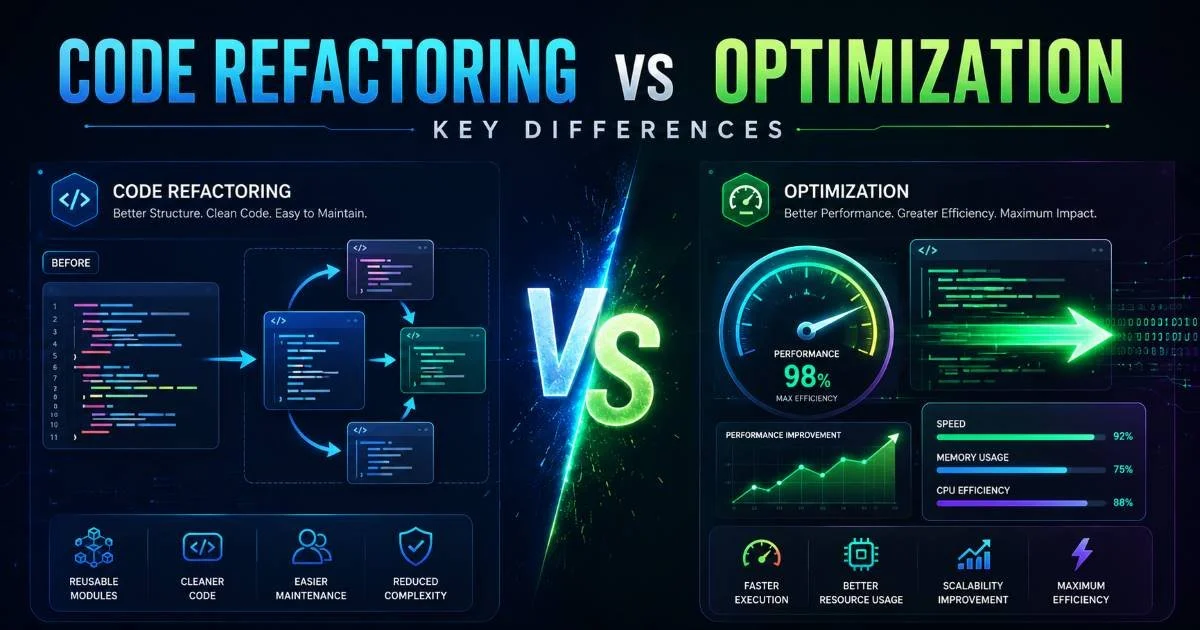
Code optimization techniques and refactoring tips both aim to produce cleaner, more scalable code, yet they attack different problems from different angles. Developers frequently conflate the two, treating them as interchangeable activities when they are, in fact, complementary disciplines with distinct goals. Refactoring restructures existing code to improve readability and maintainability without changing its external behavior.
Optimization, on the other hand, targets software performance by reducing execution time, memory consumption, or resource usage. Knowing when to apply each practice, and understanding how code optimization works at a foundational level, will make you a more effective engineer.
Choosing the wrong approach at the wrong time can introduce bugs, waste sprint cycles, or produce code that is fast but impossible to maintain. This article breaks down both practices across four clear dimensions so you can make informed decisions in your own projects.
Key Takeawaysau
- Refactoring improves code structure and readability without altering external behavior.
- Optimization targets measurable software performance gains like speed or memory usage.
- Apply refactoring first, then optimize the clean code that results.
- Premature optimization often creates complexity that outweighs the performance benefit.
- Both practices require testing, but optimization demands benchmarking with real data.
Goals and Intent
What Refactoring Solves
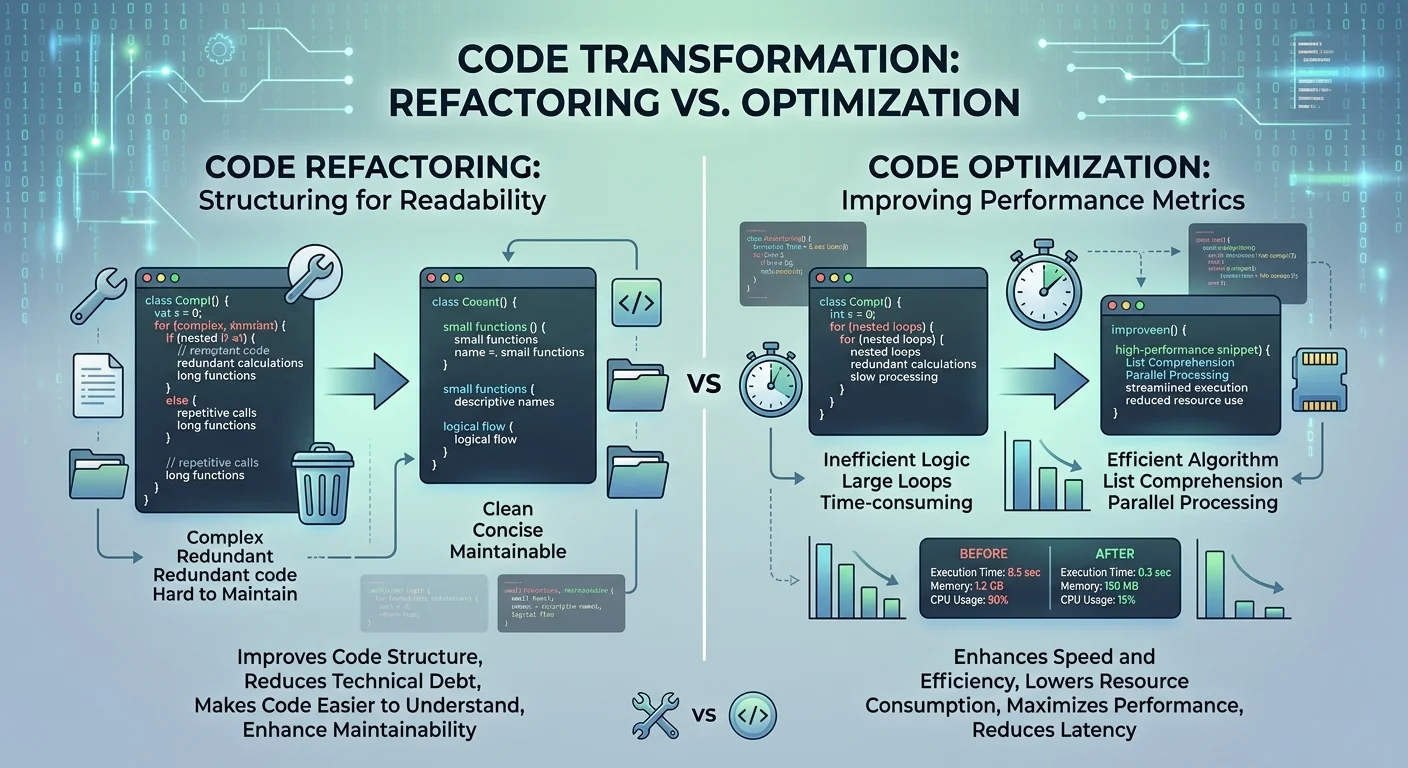
Refactoring exists to reduce technical debt. When a codebase grows through quick fixes, feature additions, and multiple contributors, its internal structure degrades. Functions become overloaded, naming conventions drift, and modules develop hidden dependencies.
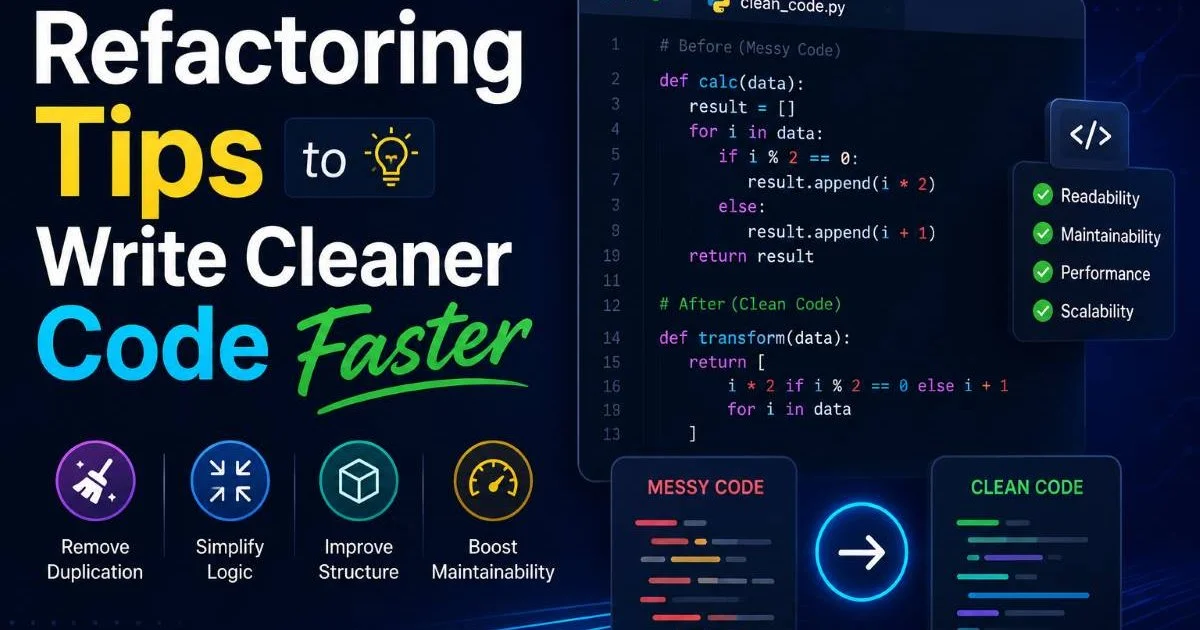
Refactoring addresses these problems by renaming variables, extracting methods, decomposing large classes, and removing duplication. The result is code that reads more like well-organized prose and less like a tangled set of instructions. For a deeper dive into practical approaches, the guide on refactoring tips to write cleaner code faster covers specific patterns you can apply immediately.
The critical constraint of refactoring is behavioral equivalence. After you refactor, every input should produce the same output as before. You are not adding features, fixing bugs, or changing performance characteristics. You are reorganizing the internals. This discipline keeps refactoring safe and predictable. Teams that practice regular refactoring report fewer bugs during feature development because developers spend less time deciphering legacy logic. Clean code also accelerates onboarding since new team members can understand the system faster.
Run your full test suite before and after every refactoring session to confirm behavioral equivalence.
What Optimization Solves
Optimization addresses a fundamentally different concern: making software perform better under real-world conditions. That might mean reducing API response times from 800ms to 200ms, cutting memory allocation in a data pipeline, or decreasing the CPU cycles consumed by a sorting algorithm. Unlike refactoring, optimization often changes the internal logic significantly.
You might replace a readable nested loop with a hash-map lookup, swap a recursive approach for an iterative one, or restructure database queries entirely. If you are new to these methods, the overview of top code optimization techniques for beginners is a practical starting point.
Optimization requires measurement. You cannot improve what you have not quantified. Profilers, flame graphs, and load tests reveal where the actual bottlenecks live, which often differ from where developers assume they are. A study by Google's engineering team found that engineers correctly guessed the performance hotspot only about 30% of the time without profiling. This is precisely why Donald Knuth's famous warning against premature optimization remains relevant decades later.
Process and Workflow
Refactoring Workflow
A solid refactoring workflow follows small, incremental steps. Martin Fowler's catalog identifies over 60 distinct refactoring operations, from simple ones like "Rename Variable" to complex transformations like "Replace Conditional with Polymorphism." Each step is deliberately small so the developer can verify correctness before moving forward. Modern IDEs like IntelliJ, VS Code, and PyCharm automate many of these operations, reducing the risk of manual errors. The typical cycle is: identify a code smell, apply a named refactoring, run tests, commit. Repeat.
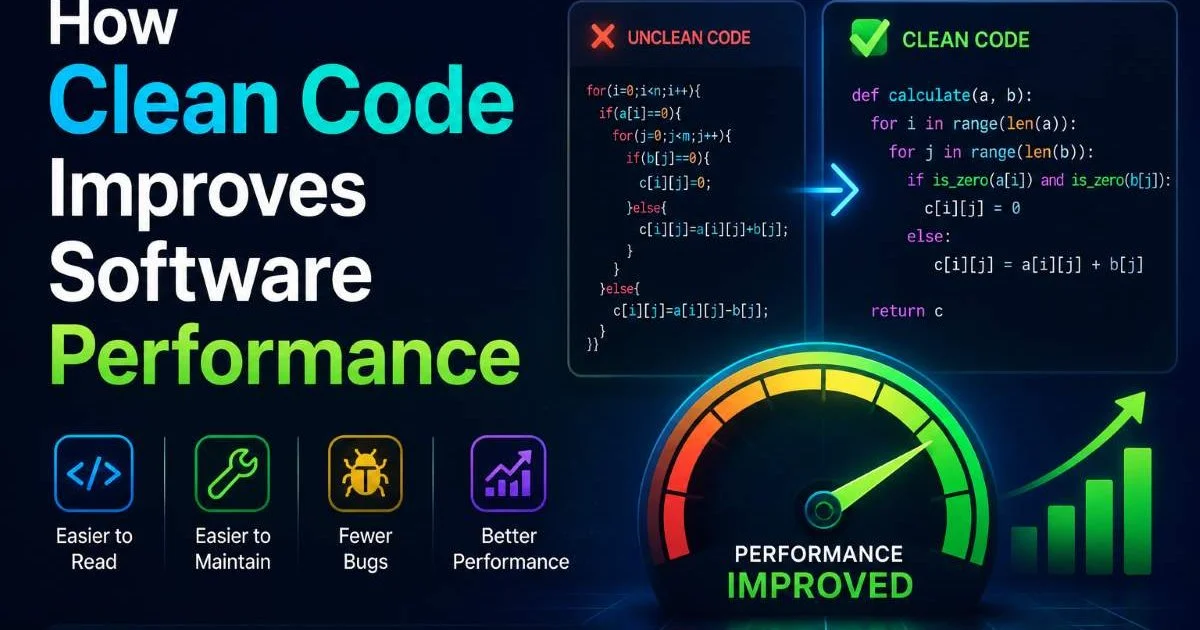
Refactoring integrates naturally into daily development. Many teams follow the Boy Scout Rule: leave the code cleaner than you found it. Rather than scheduling dedicated refactoring sprints (which managers often cut), developers improve small sections of code as they work on features or bug fixes. This approach keeps technical debt from accumulating without requiring separate budget allocation. Understanding how clean code improves software performance reinforces why this ongoing habit pays compound dividends over time.
Refactoring sprints are useful for legacy systems, but continuous refactoring during regular development is more sustainable long-term.
Optimization Workflow
Optimization follows a more investigative process. It starts with establishing a baseline through benchmarking, then profiling to identify bottlenecks, forming a hypothesis about the fix, implementing the change, and measuring again. This scientific approach prevents developers from optimizing code that does not need it. Tools vary by language: Python developers might use cProfile or py-spy, while Java engineers reach for JMH or async-profiler. Choosing the right tools matters, and selecting the best LLM for Python coding can even help generate optimized algorithm implementations faster.
The optimization cycle typically involves fewer but more impactful changes compared to refactoring. A single algorithmic improvement, like switching from O(n²) to O(n log n), can transform application performance. However, each change demands careful validation because optimization often sacrifices readability or introduces edge cases. After every optimization pass, you need both correctness tests and performance benchmarks to confirm the change achieved its goal without breaking functionality. Documentation of why you chose a less readable approach becomes important for future maintainers.
"Measure twice, optimize once. The profiler should guide your decisions, not your intuition."
Risks and Tradeoffs
Refactoring carries relatively low risk when done correctly. Because you are not changing behavior, a comprehensive test suite catches most mistakes immediately. The primary danger is refactoring without adequate test coverage, where you might accidentally alter behavior without realizing it. Another risk is over-refactoring: abstracting code into so many tiny functions or classes that the overall flow becomes hard to follow. Good refactoring makes code simpler, not more architecturally complex. If your refactoring adds more indirection than it removes confusion, you have gone too far.
Optimization carries higher stakes. When you rewrite an algorithm for speed, you might introduce subtle bugs that only surface under specific data distributions or concurrency patterns. Optimized code is often harder to read, which means future developers may inadvertently break the performance gains during maintenance.
There is also the economic tradeoff: engineering time spent optimizing a function that runs once per day is almost certainly wasted compared to optimizing a function called millions of times per second. Focus on the hot paths identified by your profiler.
Both practices can conflict with deadlines. Refactoring feels like "not shipping" to stakeholders who do not understand technical debt. Optimization can become a rabbit hole where diminishing returns consume engineering weeks.
The most effective teams set explicit criteria for both activities. For refactoring, they track code complexity metrics and address modules that exceed thresholds. For optimization, they define performance budgets (e.g., page load under 2 seconds, API latency under 100ms) and only optimize when those budgets are violated.
Never optimize without profiling first. Gut-feel optimization wastes time and often targets the wrong code.
| Dimension | Refactoring | Optimization |
|---|---|---|
| Primary Goal | Improve readability and structure | Improve speed, memory, or resource usage |
| Behavior Change | None (by definition) | Internal logic often changes significantly |
| Measurement | Code complexity metrics, review feedback | Benchmarks, profiler output, load tests |
| Frequency | Continuous, small increments | Targeted, after bottleneck identification |
| Risk Level | Low with tests | Moderate to high |
| Readability Impact | Improves readability | May reduce readability |
| When to Apply | During regular development | When performance budgets are exceeded |
When to Use Each Approach
Refactoring-First Scenarios
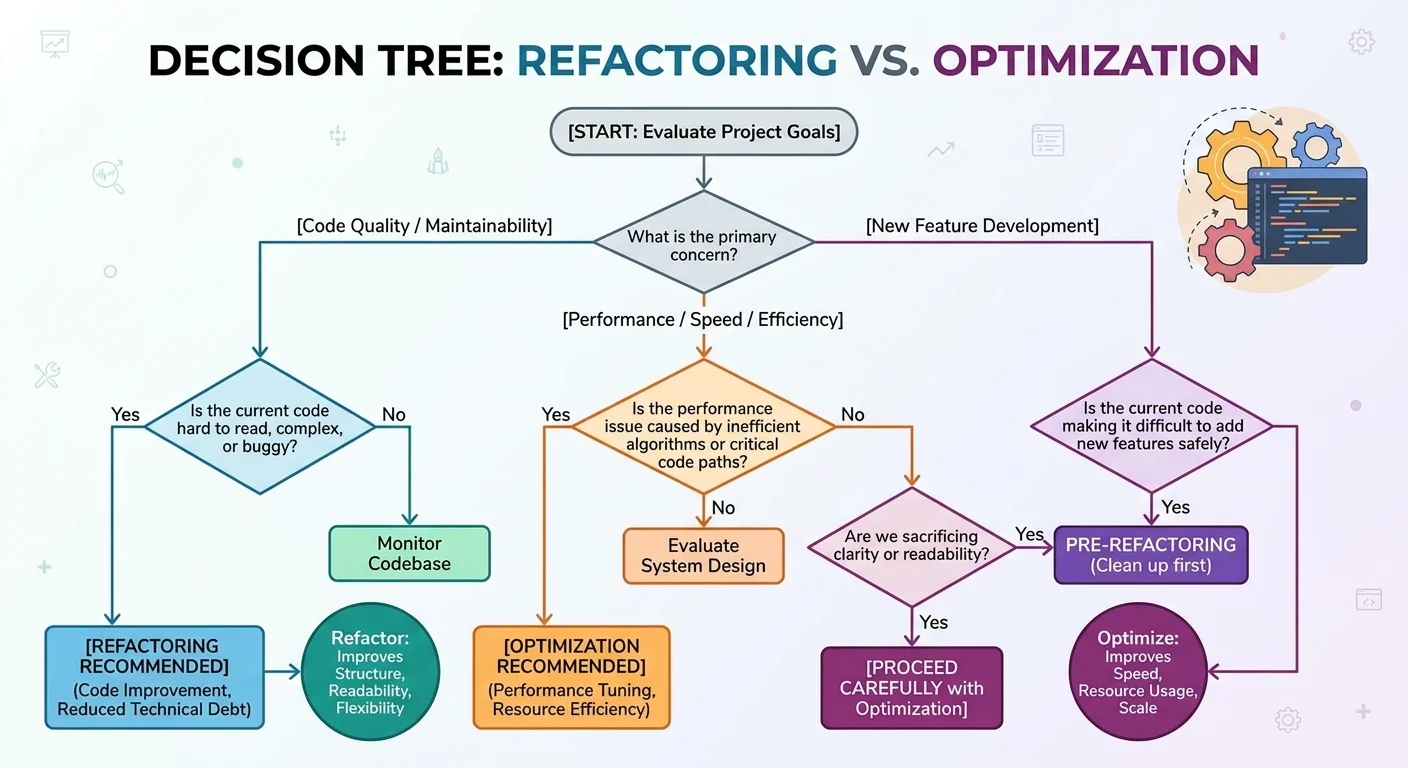
Start with refactoring when you are adding features to a messy codebase. If the existing code is hard to understand, trying to optimize it is counterproductive because you cannot reliably identify what the code actually does, let alone where it is slow. Refactor first to establish clarity, then profile the clean version to find real bottlenecks. This sequence is especially important in large teams where multiple engineers touch the same modules. Clean, well-structured code reduces merge conflicts and makes code reviews faster and more productive.
Refactoring is also the right first step when onboarding new team members or preparing a codebase for a major architectural shift, such as migrating from a monolith to microservices. You want the code to clearly express its intent before you start splitting it across service boundaries. Teams that skip this step often replicate the same messy patterns in their new architecture, just distributed across more repositories. Think of refactoring as the prerequisite that makes every other engineering activity more effective.
Before any major optimization effort, refactor the target code so you fully understand what it does and why.
Optimization-First Scenarios
There are cases where optimization must come first. Real-time systems, high-frequency trading platforms, and game engines often have strict performance constraints that override readability concerns. If your application is failing to meet its service-level objectives, users are experiencing timeouts, or infrastructure costs are spiraling because of inefficient resource usage, performance work takes priority. In these situations, you profile aggressively, optimize the critical paths, and then refactor the optimized code for maintainability afterward.
Another optimization-first scenario is during capacity planning before a major launch. If load testing reveals that your system cannot handle projected traffic, you need performance improvements before the deadline, not cleaner abstractions.
The key is to document your optimization decisions thoroughly so future developers understand why a particular piece of code looks unusual. Inline comments explaining the performance rationale, along with benchmark results stored in the repository, prevent well-meaning engineers from "cleaning up" your carefully tuned hot paths into slower but prettier code.
Frequently Asked Questions
?How do I confirm behavioral equivalence after refactoring?
?Should I optimize code before or after refactoring it?
?How much sprint time does premature optimization typically waste?
?Is it a problem if my team treats refactoring and optimization as the same thing?
Final Thoughts
Refactoring and optimization are partners, not rivals. The most productive engineering teams treat refactoring as a continuous hygiene practice and optimization as a targeted, measurement-driven intervention. For scalable code that performs well and remains maintainable, the general rule is simple: refactor to understand, then optimize what matters.
Skip the refactoring step, and your optimizations may target the wrong code. Skip the optimization step, and your beautifully clean code may fail under real-world load. Master both disciplines, apply them in the right order, and you will build software that stands the test of time and traffic.
Disclaimer: Portions of this content may have been generated using AI tools to enhance clarity and brevity. While reviewed by a human, independent verification is encouraged.